Razzia van Putten and the Hunt for Its German Perpetrators
Will the protagonist uncover the truth behind the war crime committed in Putten and hold those responsible accountable?
In October 1944, the razzia van Putten tore through the Dutch village of Putten, when a Nazi raid led to the deportation of more than 600 men to German labor camps, where many would die under brutal conditions. Told from a first-person perspective, this documentary follows a five-year search to understand how the crime unfolded and who bore responsibility, as survivors and families live with the grief, silence, and unanswered questions left behind.
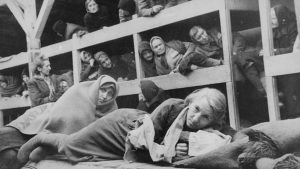
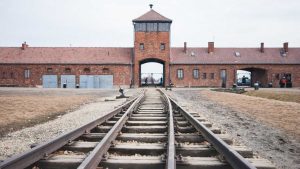
Moving in a non-linear rhythm between past and present, the film blends interviews, archival material, and personal recollections into a tense investigation shaped by memory and trauma. Villagers’ testimonies reveal how the raid ruptured community life and how the aftermath lingered for decades, with places such as the church holding painful associations of both belonging and betrayal. The recurring image of trains underscores the forced journey from home to suffering and loss, turning history into something felt rather than merely recounted.
As the narrator presses for clarity and accountability, the inquiry narrows toward one crucial figure: SS officer Albert Naumann, implicated in the operation yet denying his presence. Encounters with survivors, including Maarten Verheij, sharpen the emotional stakes and expose how denial and justification can prolong harm long after the violence ends. The central question—whether truth can still be uncovered and responsibility named—drives the film toward a confrontation with the moral ambiguities that surround wartime crimes.
The resolution remains bittersweet: full justice proves elusive, but remembrance and acknowledgment offer a fragile form of closure, insisting that the razzia van Putten must not fade into abstraction. Watch to follow this harrowing journey from loss to testimony, and from silence to the demand to be heard.
In the Nazi-occupied Netherlands of 1944, German forces tightened control as Allied armies advanced after D-Day, and resistance and reprisals escalated across the country. Communities lived under fear, shortages, censorship, and arbitrary violence, with arrests and forced labor used to break opposition and sustain the German war economy.

After the war, resentment towards Germany ran deep across Europe. In the West, the United States soon moved away from a punitive peace: through the Marshall Plan, launched in 1948, it helped rebuild West Germany alongside its former enemies, and by the end of the 1940s most German prisoners of war held by the Western Allies had returned home. This helped prevent a return to the politics of revenge that had followed the First World War and laid the ground for decades of reconciliation. In Eastern Europe the situation was very different. Millions of German soldiers ended up in Soviet labour camps, some of them in Siberia, and the last were not released until 1955–56. Around 12 million Germans fled or were expelled from Eastern and Central Europe, many suffering violence and rape along the way, and most of them settled in what became West Germany.

Although the Western approach helped Europe overcome much of its resentment and bring West Germany into European integration, traces of it lingered for decades. They surfaced, for example, in high-profile football matches between Germany and France, England or the Netherlands. This film shows that around the turn of the century, more than fifty years after the war, the relationship between the Netherlands and Germany was still sensitive in Putten, where some relatives of the deported men still refused to travel to Germany.
Knowledge Quiz
Test Your Knowledge
Pick an answer to see whether you got it right — and why.
1 / 8
0 correct so far
This film’s dominant mode is participatory, with the narrator driving the investigation through interviews, archives, and direct questioning. By placing the searcher onscreen, the film treats history as unresolved and personal, pushing viewers to weigh testimony and evidence while confronting the limits of justice.
Director & Year: Ton Verheul, 2003
Putten Raid: On 1–2 October 1944, German occupation forces carried out the “Razzia van Putten” in Putten (Gelderland), rounding up men after a resistance ambush near the Oldenallerbrug bridge between Putten and Nijkerk. Putten raid (Wikipedia)
Deportation Toll: 659 men were transported to Camp Amersfoort and then deported to the Neuengamme concentration camp system, with only 48 returning alive and 5 of those dying shortly after their return from the effects of imprisonment. Kamp Westerbork digital collection
Key Suspect: Former SS man Albert Naumann was traced and confronted during the investigation, and he consistently denied involvement in the Putten raid. Stichting Oktober ’44
Protagonist: Putten-born historian Beatrice de Graaf, then a 24-year-old PhD researcher in German history whose two great-uncles died in German camps after the raid, joins director Ton Verheul’s search and leads the interviews in Germany; today she is a well-known Dutch historian, professor of the history of international relations at Utrecht University, and a regular guest on major Dutch and Belgian news and current-affairs programmes. Beatrice de Graaf (Wikipedia)
Putten Witness: Maarten Verheij is presented as a Putten survivor/witness voice connected to the village’s long-term memory of the razzia and deportations. Amicale Internationale KZ Neuengamme (Putten)
Occupation Context: The raid occurred in the Netherlands under Nazi German occupation (1940–1945) as a reprisal policy against resistance activity late in World War II. NTR archief: De Oorlog
Memorial Legacy: Families and survivors formed Stichting Oktober ’44 (founded 1982) to preserve the history of the Putten raid and to organize annual commemorations and remembrance travel to deportation sites. Neuengamme Memorial
Topical context
This film is part of the World Map of Conflict dataset—an interactive documentary collection that combines curated films with conflict data and country context to explain geopolitical developments since 1945.
Within the collection, the film sits in the Pax Americana educational pathway, which explores the U.S.-led effort to prevent another global war by promoting, and at times enforcing, liberal democracy and capitalism.
Within that pathway, the film falls under the subtopic The Shock of Nazi Occupation and Reprisals in Western Europe. It explores how German forces punished whole communities in the occupied Netherlands, Belgium and France for resistance attacks, and the long search for accountability that followed.
This film follows Putten-born historian Beatrice de Graaf and director Ton Verheul in their search for the Germans behind the October 1944 raid on Putten, in which over 600 men were deported, until former SS adjutant Albert Naumann admits on camera that he was there.
Learning Throughlines
Reprisal raids as collective punishment and the long trauma they leave in a community.
The film opens with the toll as the narrator gives it: in early October 1944 over 600 men were taken from Putten to German labour camps, and 548 of them died there of hunger, cold and misery. After a resistance attack on a passing Wehrmacht vehicle, Wehrmacht chief Friedrich Christiansen, the narrator says, was furious and wanted to set an example: the village was sealed off, seven people were shot on the spot, all men over 18 had to report to the church or the school, and more than 100 houses were set on fire. A daughter remembers watching her father walk off saying he had done nothing and would be right back, and Putten, in the narrator’s words, became the village of widows and orphans. Christiansen wants an example made and the village is sealed off 00:04:04
Denial, partial records and survivor memory in the late pursuit of justice.
The search keeps running into walls: a Dortmund prosecutor who only took up the file decades later found that the suspects he traced had died, except one he could not locate, and an official at the Central Office in Ludwigsburg explains that the deportation itself would count as serious deprivation of liberty and is time-barred, so only murder could still be pursued. In the Berlin archive of the Wehrmacht information office, staff can confirm a name but cite data protection and say they release names only when the judicial authorities ask. Historian Hannes Heer sums up the decades of delay with the phrase that the problem resolves itself biologically, while survivor Maarten Verheij’s memories of digging tank ditches and fearing the beatings carry what the files do not. Ludwigsburg: the deportation itself is now time-barred 00:37:28
Individual responsibility within the occupation system versus diffuse blame.
Responsibility is pushed elsewhere throughout: Carola Scheller, Fullriede’s companion, says he saved Putten by not carrying out the order to raze it and that against the SS everyone was powerless, while war historian Franz Kurowski places the blame on the regional military command and the security service rather than the fighting troops. The film narrows the question to one man, Albert Naumann, adjutant in the Amersfoort SS battalion, who was sentenced to five years for other raids and the abuse of prisoners but always denied having been in Putten. Confronted with a witness statement and his wife’s questions, he first says he slept through the call, then, in his own account, describes taking charge at the train and saying it was full, the right people were inside, and it could leave. Naumann's own account: the train is full, let it leave 01:21:10
Remembrance and acknowledgment as partial justice when formal accountability fails.
Since the 1960s, people from Putten have visited the graves of their villagers in Ladelund every year, and the annual commemoration in Putten welcomes guests from Ladelund and Neuengamme in a spirit of reconciliation, even though some relatives still refuse to travel to Germany. When Naumann finally says he can only be ashamed, the narrator calls it a doubtful expression of regret that will probably mean little to most relatives, yet the first time one of the Wehrmacht and SS men of that time used the word shame. The film closes with Maarten Verheij, who has since died, saying he learned to forgive in Ladelund and warning that the beast is in all of us. Naumann: I can only be ashamed 01:17:25
Related topics
Documentary Mode
This film’s dominant mode is participatory, with the narrator driving the investigation through interviews, archives, and direct questioning. By placing the searcher onscreen, the film treats history as unresolved and personal, pushing viewers to weigh testimony and evidence while confronting the limits of justice.
Key Facts
Director & Year: Ton Verheul, 2003
Putten Raid: On 1–2 October 1944, German occupation forces carried out the “Razzia van Putten” in Putten (Gelderland), rounding up men after a resistance ambush near the Oldenallerbrug bridge between Putten and Nijkerk. Putten raid (Wikipedia)
Deportation Toll: 659 men were transported to Camp Amersfoort and then deported to the Neuengamme concentration camp system, with only 48 returning alive and 5 of those dying shortly after their return from the effects of imprisonment. Kamp Westerbork digital collection
Key Suspect: Former SS man Albert Naumann was traced and confronted during the investigation, and he consistently denied involvement in the Putten raid. Stichting Oktober ’44
Protagonist: Putten-born historian Beatrice de Graaf, then a 24-year-old PhD researcher in German history whose two great-uncles died in German camps after the raid, joins director Ton Verheul’s search and leads the interviews in Germany; today she is a well-known Dutch historian, professor of the history of international relations at Utrecht University, and a regular guest on major Dutch and Belgian news and current-affairs programmes. Beatrice de Graaf (Wikipedia)
Putten Witness: Maarten Verheij is presented as a Putten survivor/witness voice connected to the village’s long-term memory of the razzia and deportations. Amicale Internationale KZ Neuengamme (Putten)
Occupation Context: The raid occurred in the Netherlands under Nazi German occupation (1940–1945) as a reprisal policy against resistance activity late in World War II. NTR archief: De Oorlog
Memorial Legacy: Families and survivors formed Stichting Oktober ’44 (founded 1982) to preserve the history of the Putten raid and to organize annual commemorations and remembrance travel to deportation sites. Neuengamme Memorial