


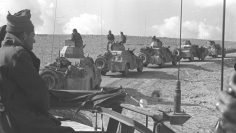


Holocaust Survivors Testimony of the Gas Chambers
How do the barbers reconcile their roles in the systematic extermination of innocent people while trying to maintain a facade of normalcy?
Holocaust Survivors Testimony of the Gas Chambers draws its power from holocaust survivors testimony delivered in the first person, as men who were forced to work as barbers inside a concentration camp recall what they saw and what they were made to do. In a somber, reflective documentary mode, they describe cutting the hair of women and children in the final moments before they were driven toward the gas chambers, performing a task made to look routine even as death surrounded them.
Told in a chronological flow, the film follows the barbers’ accounts as their understanding shifts from confusion to dreadful certainty. The simple act of cutting hair becomes a brutal symbol of stolen identity and erased humanity, while the gas chambers stand as the stark endpoint of a system built for extermination. As the memories unfold, the central question tightens: how could anyone endure such a role and still attempt to maintain a façade of normalcy? The men speak to the internal conflict between the instinct to survive and the moral weight of serving a process designed to kill innocent people.
A turning point arrives when they fully grasp the fate awaiting those they are ordered to “prepare,” forcing an emotional reckoning that the film does not soften or resolve. Instead, it stays with the psychological toll—trauma, lingering guilt, and the haunting feeling of complicity imposed under terror. By foregrounding witness over explanation, holocaust survivors testimony here becomes both evidence and lament, confronting viewers with the unbearable choices created by systematic evil. Let these voices guide you into a film that must be seen—watch and bear witness.
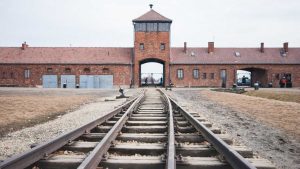
During Nazi rule in Europe from 1939 to 1945, Germany built a continent-wide system of ghettos, forced labor, and extermination camps. Antisemitic laws, wartime total control, and industrialized mass killing defined daily life, culminating in the Holocaust as World War II raged.
Knowledge Quiz
Test Your Knowledge
Pick an answer to see whether you got it right — and why.
1 / 8
0 correct so far
This film’s dominant mode is participatory. It centers on first-person testimony shaped through direct interviewing, keeping attention on lived memory and moral conflict. This approach makes the horror felt through human voices, insisting viewers confront complicity, survival, and trauma without distancing facts into abstraction.
Director & Year: Claude Lanzmann, 1985
Core Subject: The work documents the Nazi genocide of European Jews during World War II primarily through filmed interviews with survivors, witnesses, and perpetrators rather than archival wartime footage. Goethe-Institut film database
Main Protagonist: Abraham Bomba (1913–2000) was a Polish Jewish barber and Holocaust survivor whose testimony includes being forced at Treblinka to cut women’s hair immediately before they were killed in the gas chambers. USHMM Holocaust Encyclopedia
Bomba Background: Abraham Bomba was a barber in Częstochowa when Nazi Germany invaded Poland in September 1939, a turning point that led to his later persecution and deportation. USHMM Holocaust Encyclopedia
Treblinka Context: Bomba’s account centers on Treblinka II, the German Nazi extermination camp in occupied Poland where deported Jews were murdered, including by gassing, as part of the “Operation Reinhard” killing program. Muzeum Treblinka
Camp Work Detail: At Nazi killing centers, women’s hair was routinely cut off before gassing as part of the extermination procedure, reflecting the industrialized processing of victims. Auschwitz-Birkenau Memorial
Geopolitical Setting: The events described took place in German-occupied Poland during World War II, under the Nazi regime’s state policy of mass murder targeting Jews across occupied Europe. Goethe-Institut film database
Postwar Testimony: After the war, Bomba gave legal testimony connected to prosecutions of Treblinka personnel in West Germany, linking survivor witness accounts to postwar judicial efforts. Muzeum Treblinka
Topical context
This film is part of the World Map of Conflict dataset—an interactive documentary collection that combines curated films with conflict data and country context to explain geopolitical developments since 1945.
Within the collection, the film sits in the Pax Americana educational pathway, which explores the U.S.-led effort to prevent another global war by promoting, and at times enforcing, liberal democracy and capitalism.
Within that pathway, the film falls under the subtopic Global Responsibility: Fear and Moral Shocks. It explores how the Holocaust, the atomic bombings and the refugee crises left a fear of new catastrophe that drove the postwar push for the UN, war-crimes trials and human-rights law.
This film shows the killing from the inside, where it can no longer be denied. A prisoner forced to work in the gas chamber describes what he saw there. Another escapes Auschwitz to warn the world, and a courier carries an eyewitness account of the Warsaw ghetto to the Allies. The film confronts the viewer with what could be known at the time. That shock is what made never again the promise of the postwar order.
Learning Throughlines
Coerced roles and survival ethics: victims forced into the killing process.
Abraham Bomba recalls that about four weeks after he arrived at Treblinka the Germans ordered all the barbers they could find to be gathered, and that they were then told to make the women believe they were only getting a haircut before a shower, with an SS man standing behind them. Rudolf Vrba explains that any prisoner on the Auschwitz ramp who tried to warn newcomers was clubbed to death or shot, because panic would disrupt the killing. Later he describes asking Freddy Hirsch to lead an uprising of the Czech family transport, and how Hirsch, unable to abandon the children in his care, took poison instead. Bomba: the barbers had to make the women believe it was only a haircut 00:22:40
Dehumanization as procedure: hair-cutting as symbol and instrument of identity erasure.
Bomba describes about 16 or 17 barbers working on benches, with no mirrors, cutting the hair of 60 to 70 naked women and children at a time, each haircut taking no more than about two minutes. They used only scissors and a comb so that it would look like a real haircut, while taking off as much hair as possible because the Germans wanted it transported to Germany. The hair-cutting thus served the deception and the extraction of material at the same time, minutes before the gassing. Bomba: the women's hair was to be transported to Germany 00:25:46
Psychological toll and memory: guilt, trauma and the struggle to narrate the unspeakable.
Asked what he felt when he first saw the naked women and children, Bomba says that working day and night among the bodies made feeling disappear, that you were dead with your feeling. When he begins to tell how women from his own town recognised him, and how a fellow barber saw his wife and sister enter the gas chamber, he stops and asks not to go on, before finishing the account. Jan Karski, who has been a teacher for decades and says he never spoke of this to his students, also insists he does not go back in his memory, yet gives his testimony for the historical record. Bomba: a fellow barber sees his wife and sister enter the gas chamber 00:30:59
The banality and routinization of mass murder versus personal moral reckoning.
Historian Raul Hilberg reads a railway timetable for special trains to Treblinka and explains that the deportations were billed through the same travel bureau that sent vacationers to resorts, at group fares, with children under four travelling free, and paid for with confiscated Jewish property because there was no budget for destruction. Against this routine, the film sets individual reckonings: Vrba decides to escape from Auschwitz to warn the world, and Hilberg reads how the head of the Warsaw Jewish council, ordered to supply thousands of people a day for deportation, ended his life after writing that they wanted him to kill the children with his own hands. Hilberg: one travel bureau for deportees and vacationers alike 01:53:34
Related topics

Documentary Mode
This film’s dominant mode is participatory. It centers on first-person testimony shaped through direct interviewing, keeping attention on lived memory and moral conflict. This approach makes the horror felt through human voices, insisting viewers confront complicity, survival, and trauma without distancing facts into abstraction.
Key Facts
Director & Year: Claude Lanzmann, 1985
Core Subject: The work documents the Nazi genocide of European Jews during World War II primarily through filmed interviews with survivors, witnesses, and perpetrators rather than archival wartime footage. Goethe-Institut film database
Main Protagonist: Abraham Bomba (1913–2000) was a Polish Jewish barber and Holocaust survivor whose testimony includes being forced at Treblinka to cut women’s hair immediately before they were killed in the gas chambers. USHMM Holocaust Encyclopedia
Bomba Background: Abraham Bomba was a barber in Częstochowa when Nazi Germany invaded Poland in September 1939, a turning point that led to his later persecution and deportation. USHMM Holocaust Encyclopedia
Treblinka Context: Bomba’s account centers on Treblinka II, the German Nazi extermination camp in occupied Poland where deported Jews were murdered, including by gassing, as part of the “Operation Reinhard” killing program. Muzeum Treblinka
Camp Work Detail: At Nazi killing centers, women’s hair was routinely cut off before gassing as part of the extermination procedure, reflecting the industrialized processing of victims. Auschwitz-Birkenau Memorial
Geopolitical Setting: The events described took place in German-occupied Poland during World War II, under the Nazi regime’s state policy of mass murder targeting Jews across occupied Europe. Goethe-Institut film database
Postwar Testimony: After the war, Bomba gave legal testimony connected to prosecutions of Treblinka personnel in West Germany, linking survivor witness accounts to postwar judicial efforts. Muzeum Treblinka
Related videos
 Watch LaterAdded
 Watch LaterAdded
 Watch LaterAdded
 Watch LaterAdded
 Watch LaterAdded
 Watch LaterAdded