




The Forgery
This investigating documentary about international art forgery shows that art is big business. It is a detective story in which the German inspector Scholler, is in pursuit of the infamous Dutch forger Geert Jan Jansen. Jansen is world-renowned and has forged many paintings of Picasso, Klimt, Corneille and Apple.
Content
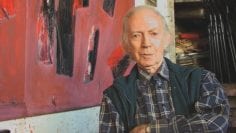
Hans Hamers, an art collector, purchases a painting of three tulips by Corneille (1922). Hamers doubts its authenticity, so he consults various art specialists. The search for the forger ends in France, where detective Scholler traces the Dutch forger to a castle near Poitiers. Jansen forged approximately 1,500 works of art over a period of ten years, including pieces by Picasso and the CoBrA artists Appel and Corneille. At home in Paris, Corneille is asked to comment on the authenticity of the painting of three tulips.
Style&Form
Arjanne Laan’s story takes the broad topic of international art forgery and makes it understandable, and is told from both the point of view of the artist Corneille and the forger Jansen.
Social Interest
In this film, the detective speculates as to the motives of the forger. He characterizes forgers as failed artists who, unable to sell their own work, turn to the forgery of successful artists’.
Legal Perspective
Arjanne Laan’s documentary demonstrates that ‘good’ and ‘bad’ are complex concepts in the art world. Who is actually responsible for forgery: the forger, the art dealers, or the market itself? It has been estimated the 20% of the art on the market is forged. The experts had difficulty distinguishing Geert Jan Jansen’s forgeries from the real thing, but existing investigative methods based on art history and physics can be used to prove forgery. The next logical step is to make forgery punishable by law, but as long as a forger refrains from signing the forged work, it is not technically forgery. When forged work is signed by the forger, this is rarely reported to the authorities.
Quotes
‘People buy paintings because of the artists’ fame or the signature on the piece. It’s like indulgences in the Middle Ages. There’,s nothing honest about it.'[ ] ‘The actual fraud doesn’t happen in the studio, but during the sale.’ Geert Jan Jansen ‘Forgers have an important function; their existence sheds light on the cunning of the art dealers, the pretentions of the experts and buyers’ obsession with famous names.’ Diederik Kraaijpoel, writer / lecturer / artist
About Geert Jan Jansen
Geert Jan Jansen was arrested in 1994 but was released after 18 months in prison due to a lack of sufficient evidence. Forgery is often left unreported, as owners of forged works want to preserve their value. When Jansen was convicted, the judge ordered that all 1,600 of his paintings, including a number of originals, had to be destroyed. Jansen successfully appealed the decision and has reclaimed a portion of the collection. There is only one police detective in the Netherlands specialized in the investigation of forgery and other art-related crimes, such as art theft and smuggling.
Historical Perspective
Art forgery has always existed: Roman sculptures were copies of those made by the Greeks and Renaissance artists learned to imitate the great masters of their time. Until the beginning of the 19th century, authenticity was not particularly valued and it is often difficult to distinguish between copies, replicas, pastiches, and reproductions.
Geert Jan Jansen Today
Geert Jan Jansen continues to paint in the style of Appel, Klimt, Pollock, and Picasso, but now signs his own name on his work. He is a regular on the lecture circuit and gladly signs copies of the book he wrote in prison, Magenta. Adventures of a master forger, using the signature of an artist of your choosing.