


Duende
DUENDE is a superb investigating documentary dwelling into the mysticism of art and Spanish culture. Coming from southern Spain and strongly associated with Flamenco and Bullfighting, the wordDuende has only recently migrated to English. Like art itself it is a concept hard to pin down. People who have heard, seen or felt it, know what Duende is; others don’t. Through Duende this documentary film lets you participate in the magic of creating art, song and dance. If you want to be inspired, ‘Duende’ is a good place to start.
Social Interest
In all Andalusia, from the rock of Jaen to the shell of Cadiz, people constantly speak of the Duende and find it in everything that springs out of energetic instinct. In spanish culture Duende is a power and not a behavior, it is a struggle and not a concept. It is said: Duende is not in the throat; duende surges up from the soles of the feet. Which means it is not a matter of ability, but of real live form; of blood; of ancient culture; of creative action.”
Historical Interest
It is important to note that Flamenco sprang from the lower levels of Andalusian society, and thus lacked the prestige of art forms among the middle and higher classes. The roots of are not precisely known, but it is generally acknowledged that flamenco and the use of the word Duende grew out of the unique interplay of native Andalusian, Islamic, Sephardic, and Gypsy cultures that existed in Andalusia prior to and after the Reconquest. Latin American and especially Cuban influences have also been important to shape several flamenco musical forms.
Activate English subtitles
In your Windows Media Player go to Play->Captions and subtitles->On
Scenes
Explanation of a duende sound
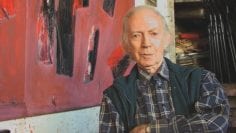
Fernando Quinones explains the difference between a singer’s voice with and without duende, by giving a small demonstration. The voice with duende is louder and more emotional.
Musical fragment 1
This fragment shows a group of four Spanish men making music, singing and dancing in a way that shows duende.
The origin of duende according to Fernando Quinones
Fernando Quinones himself thinks that the origin of the duende concept lies within the culture of the gitanos, with the flamenco dancing and the bull fighting.
The lecture on duende, by Frederico Garcia Lorna
The famous poet and script writer Frederico Garcia Lorna has given a lot of lectures about the nature of duende. During the lectures he tried to describe the dark feelings and emotions that constitute duende. Furthermore, Lorna talks about the artist Manuel Torres, one of Andalusia’s biggest artists of that era. This scene shows a man reading a part of Lorna’s lecture out loud.
Salvador Vega and Fernando Quinones about duende
In this fragment, Salvador Vega and Fernando Quinones try to put in to words the concept of duende. Vega describes duende as an emotion, as something impossible to put into words. According to Quinones, the meaning of duende is to be found in the world of art, because duende is about expressing oneself.
Salvador Vega about singers and duende
Vega is explaining why a singer doesn’t always sing the same way. According to him, the quality of the singer and the song depends on whether there is duende or not. A singer doesn’t automatically have duende when he’s performing, the duende emotion can vary every time.
Musical fragment 2
Musical fragment with Spanish singer and guitar
Fernando Quinones reading a part of Lorna’s lecture.
Fernando Quinones reads a part of the lecture by Frederico Garcia Lorna about duende. In the lecture, he describes duende as a feeling deep inside that nobody can explain but everyone understands. It is an old, dark, mysterious power.
Fernando Quinones and the magic of duende
The concept duende is used in Andalusia to describe flamenco music and in the bull fights (torreos). Fernando Quinones compares duende with the appearance of an angel. They are both mysterious and unexpected, but duende has got a dramatic touch. He also states that there’s an old Arab word for magic and exeptional emotion that is being used in Andalusie.
Fernando Quinones, flamenco and emotions
Fernando Quinones is reading an article about the psycho-analysis and flamenco being a way of expressing emotions.
Duende and torreos
This fragment shows a bull fight in a Spanish stadion. Several people and with them Antonio Corbacho describes the connection between duende and toreador, the person fighting with the bull.
Duende, bulls and death
In this clip it becomes clear that the presence of danger and death is playing an important role for duende. This is shown in a bull fight, by the fight between the toreador and the bull during a bull fight.
Musical fragment 3
The last part of the documentary consists of a musical performance by a Spanish singer and a guitar player.
